No signup required • Works in your browser • 100% secure
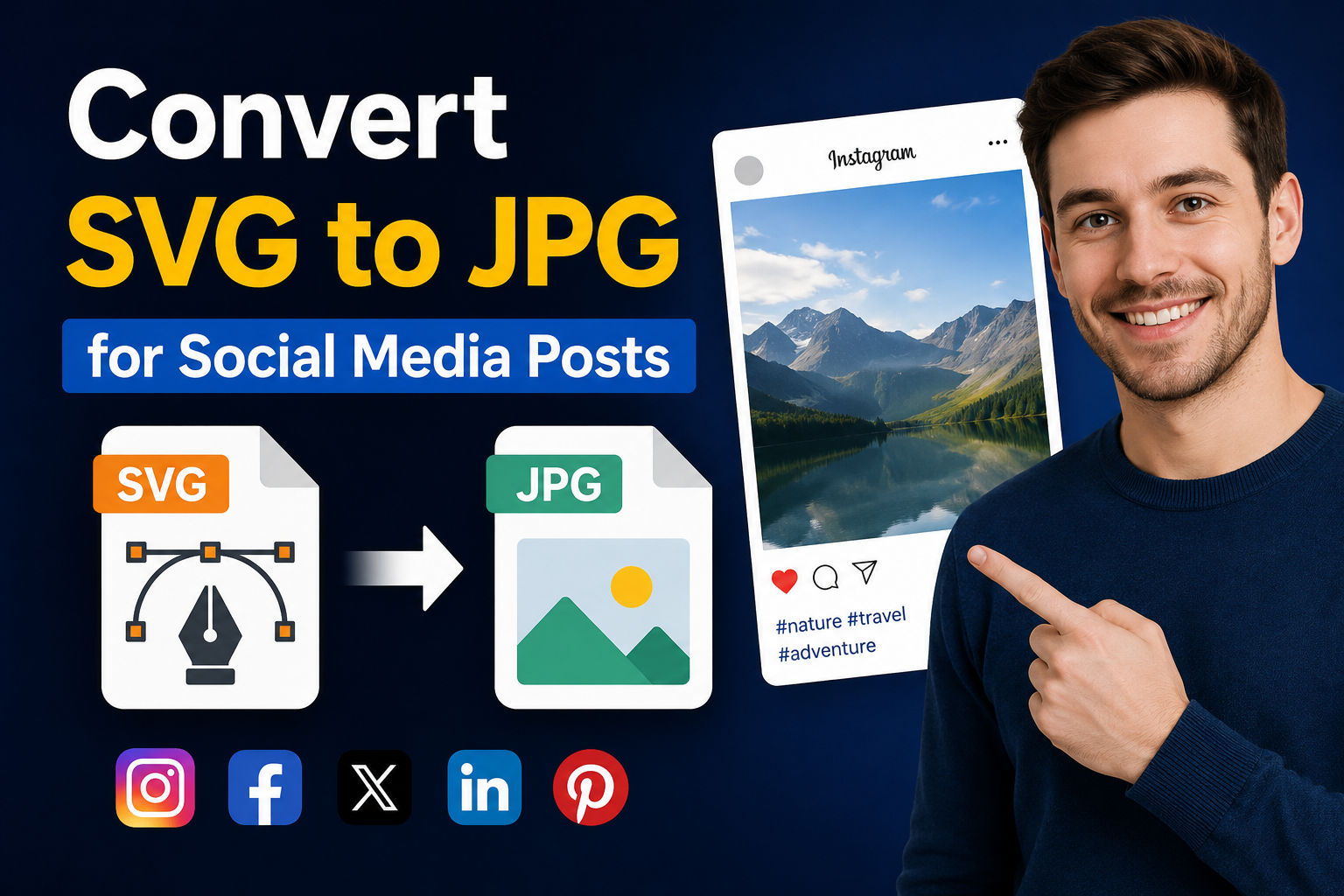
Convert SVG to JPG for Social Media Posts - Keep Quality Sharp
Converting SVG vector graphics to JPG format makes your designs compatible with social media platforms, email attachments, and older software that cannot display vector files properly.
Understanding SVG vs JPG Format Differences
SVG files store images as mathematical instructions that describe shapes, colors, and positions. This vector approach means SVG graphics scale perfectly from tiny icons to billboard-sized prints without losing sharpness.
JPG format uses pixel-based compression that works well for photographs and complex images with many colors. Social media platforms prefer JPG because the files load faster and display consistently across different devices and browsers.
The conversion process transforms vector instructions into a grid of colored pixels. Once converted, the JPG cannot scale up without becoming blurry, so choosing the right output resolution during conversion becomes critical for your intended use.
When SVG to JPG Conversion Makes Sense
Social media platforms like Instagram, Facebook, and Twitter work better with JPG images because they compress and display predictably across mobile apps and desktop browsers.
Email newsletters and attachments benefit from JPG format since many email clients struggle with SVG files or block them for security reasons. JPG ensures your graphics display properly for all recipients.
Print shops and professional printing services often request JPG files for business cards, flyers, and marketing materials because their software systems handle raster images more reliably than vector formats.
Technical Advantages of Each Format
- SVG files remain crisp at any size but require compatible software to display
- JPG files work everywhere but lose quality when enlarged beyond original dimensions
- SVG graphics often have smaller file sizes for simple logos and illustrations
- JPG compression reduces file size significantly for complex images with many colors
- SVG supports animation and interactive elements that JPG cannot reproduce
- JPG provides predictable color reproduction across different devices and screens
Choosing the Right Resolution and Quality Settings
Resolution determines how many pixels wide and tall your converted JPG will be. Higher resolutions create larger files but preserve more detail, while lower resolutions save storage space and load faster online.
Quality settings control JPG compression levels that balance file size against visual clarity. Higher quality percentages preserve more detail but create larger files, while lower settings compress aggressively and may introduce visible artifacts.
Resolution Guidelines for Different Uses
Social media posts work well at 1080x1080 pixels for square images or 1200x630 pixels for landscape orientation. These dimensions match platform requirements while keeping file sizes manageable for fast loading.
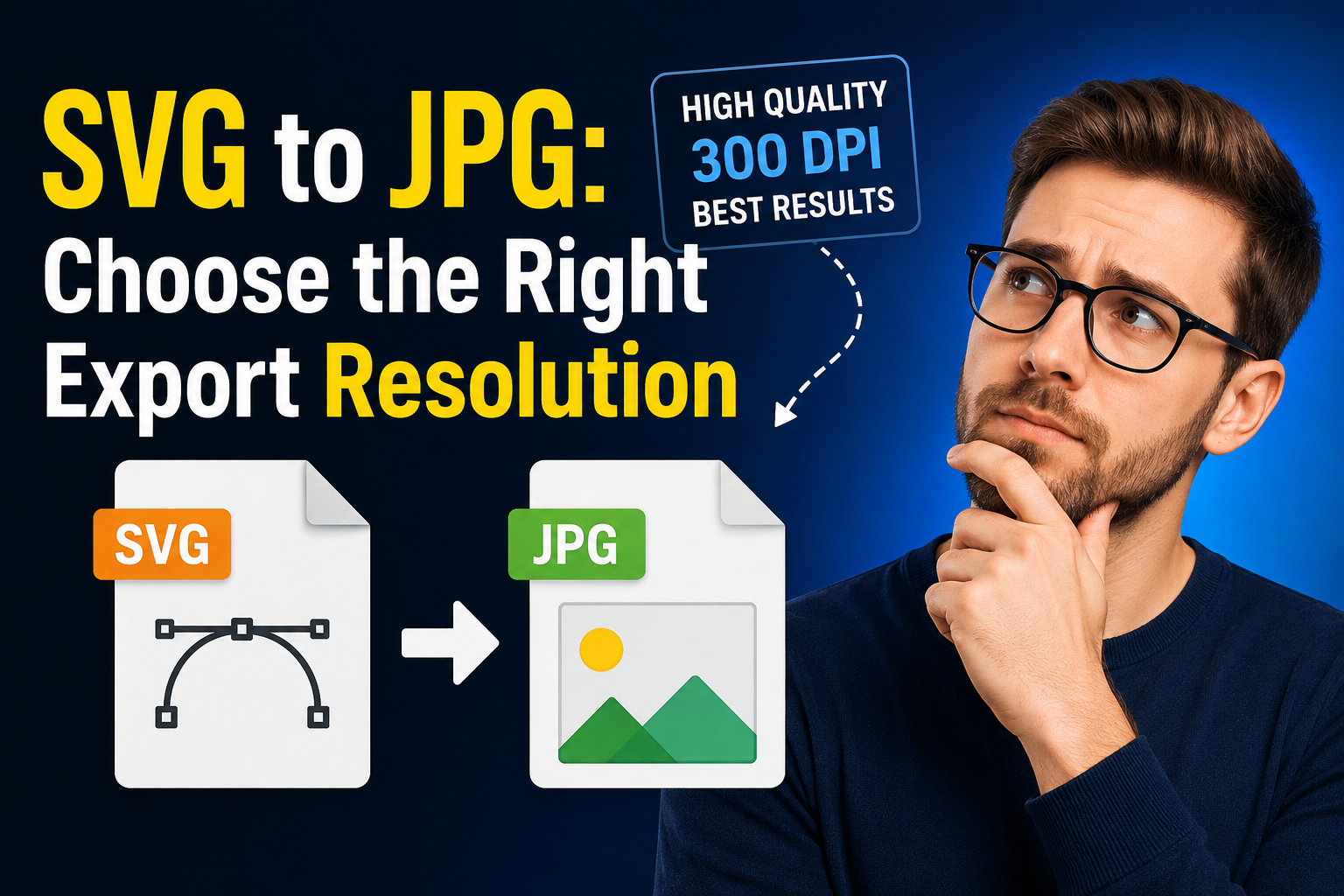
Web graphics typically need 72-96 DPI resolution, which translates to about 800-1200 pixels wide for most website applications. This provides sharp display on standard monitors without creating unnecessarily large files.
Print applications require much higher resolutions, typically 300 DPI or more. A business card design might need 1050x600 pixels, while poster-sized prints require several thousand pixels in each dimension.
Quality Settings Impact on File Output
Quality levels above 85% preserve fine details and text readability but create larger file sizes. This setting works best for professional presentations, portfolios, and situations where image quality takes priority over file size.
Quality between 70-85% provides good balance for most web and social media uses. The compression removes some data but maintains acceptable visual quality while reducing file sizes significantly.
Quality below 70% creates noticeable compression artifacts around text and sharp edges. This aggressive compression works for thumbnails or preview images where small file size matters more than perfect clarity.
Real-World Applications and Use Cases
Marketing teams frequently convert SVG logos to JPG for social media campaigns because platforms like LinkedIn and Facebook display JPG images more consistently across their mobile and desktop interfaces.
E-commerce businesses use SVG to JPG conversion for product listings on marketplaces like Amazon and eBay, which prefer standardized image formats that load quickly for shoppers browsing on various devices.
Social Media Platform Requirements
Instagram stories and posts perform better with JPG format because the platform automatically compresses uploaded images. Converting from SVG to JPG with optimized settings prevents Instagram from applying additional compression that might degrade quality.
Twitter profile headers and promotional graphics display more reliably as JPG images, especially when users access the platform through third-party apps or older mobile devices that might not render SVG files properly.
Pinterest pins and boards favor JPG images for faster loading and better compatibility with the platform's mobile-first approach. High-quality JPG conversions ensure your graphics look professional in Pinterest feeds and search results.
Professional and Business Applications
Email marketing campaigns benefit from SVG to JPG conversion because many corporate email systems filter or block vector graphics as potential security risks. JPG ensures your newsletter graphics reach all subscribers.
Presentation software like PowerPoint and Google Slides works more smoothly with JPG images, avoiding compatibility issues that sometimes occur when importing SVG files across different versions and operating systems.
Print service providers typically request JPG files for business cards, brochures, and signage because their production workflows handle raster images more efficiently than vector formats that may require additional processing.
Troubleshooting Common Conversion Issues
Blurry output often results from converting at too low resolution for the intended use. If your converted JPG looks fuzzy, try increasing the output dimensions to match or exceed your final display requirements.
Color shifts can occur when SVG files use color profiles or special effects that don't translate directly to JPG format. Preview your converted files before using them in final projects to catch any unexpected color changes.
Resolution and Scaling Problems
Text becoming unreadable happens when the output resolution is too low for the text size in your original SVG. Increase pixel dimensions or simplify text elements to ensure readability after conversion.
Jagged edges around shapes indicate insufficient resolution for smooth curves and diagonal lines. Higher pixel dimensions create smoother edges, though this increases file size proportionally.
Aspect ratio distortion occurs when width and height settings don't match the original SVG proportions. Use aspect ratio lock features or calculate proper dimensions manually to maintain visual accuracy.
Quality and Compression Challenges
Compression artifacts appear as blocky patterns or halos around high-contrast edges when quality settings are too aggressive. Increase quality percentage or reduce compression to minimize these visual defects.
File size becoming too large typically results from excessive resolution or maximum quality settings. Balance quality needs against practical file size limits for your intended distribution method.
Color banding in gradients happens when JPG compression cannot represent smooth color transitions adequately. Consider using PNG format instead if maintaining gradient smoothness is critical for your project.
Optimization Strategies for Different Scenarios
Web optimization requires balancing image quality against page loading speed. Use dimensions that match your largest expected display size and quality settings around 80% for most web applications.
Mobile optimization prioritizes smaller file sizes because users often browse on limited data connections. Lower resolution and moderate quality settings create mobile-friendly images that still look professional on phone screens.
Platform-Specific Optimization
Social media optimization involves matching each platform's preferred dimensions and file size limits. Research current requirements for your target platforms since these specifications change periodically.
Email optimization requires smaller file sizes to avoid delivery problems and ensure fast loading in email clients. Compress images more aggressively for email use while maintaining acceptable visual quality.
Print optimization demands higher resolutions and quality settings to produce sharp results on physical media. Plan for significantly larger file sizes when preparing images for professional printing applications.
Workflow Integration Tips
Batch processing multiple SVG files saves time when converting entire design libraries or marketing asset collections. Standardize your conversion settings for consistent output across related graphics.
Version control becomes important when maintaining both SVG originals and JPG outputs. Establish clear naming conventions to track which JPG files correspond to which SVG sources and conversion settings.
Quality assurance should include testing converted JPG files in their intended contexts before finalizing projects. Preview images on target devices or platforms to verify acceptable appearance and performance.
Security and Privacy Considerations
File processing security involves ensuring your original SVG files and converted JPG outputs remain private during the conversion process. Browser-based converters process files locally without uploading sensitive designs to external servers.
Metadata removal happens automatically during SVG to JPG conversion, which can be beneficial for removing design software information, creation dates, or other embedded data that might reveal internal business processes.
Data Protection Best Practices
Local processing tools eliminate concerns about proprietary designs being stored on third-party servers or accessed by unauthorized parties. This approach particularly benefits businesses handling confidential branding or unreleased product imagery.
File validation before conversion helps identify potentially problematic SVG files that might contain embedded scripts or unusual elements. Clean, standard SVG files convert more predictably and securely.
Output verification ensures converted JPG files contain only expected image data without hidden elements or corrupted sections that could cause problems in downstream applications or sharing scenarios.
Frequently Asked Questions
What resolution should I use when converting SVG to JPG for social media posts?
Use 1080x1080 pixels for square social media posts or 1200x630 pixels for landscape images. These dimensions work well across most platforms while keeping file sizes manageable for fast loading and good visual quality.
Why does my converted JPG look blurry compared to the original SVG?
Blurriness occurs when the output resolution is too low for your intended use. SVG graphics are vector-based and infinitely scalable, while JPG uses fixed pixels. Increase the pixel dimensions during conversion to match your final display size.
What JPG quality setting gives the best balance of file size and image clarity?
Quality settings between 80-90% provide excellent results for most applications. Use 90%+ for professional presentations, 80-85% for web and social media, and 70-80% when file size restrictions require more compression.
Can I convert SVG files with text and maintain readable quality in JPG format?
Yes, but ensure adequate resolution for text clarity. Small text requires higher pixel dimensions to remain readable after conversion. Use at least 150-200 DPI equivalent resolution for documents containing important text elements.
How do I prevent color changes when converting from SVG to JPG format?
Color shifts can occur due to different color space handling. Use standard RGB colors in your original SVG and avoid special effects or filters that may not translate properly. Preview converted files before finalizing projects.